
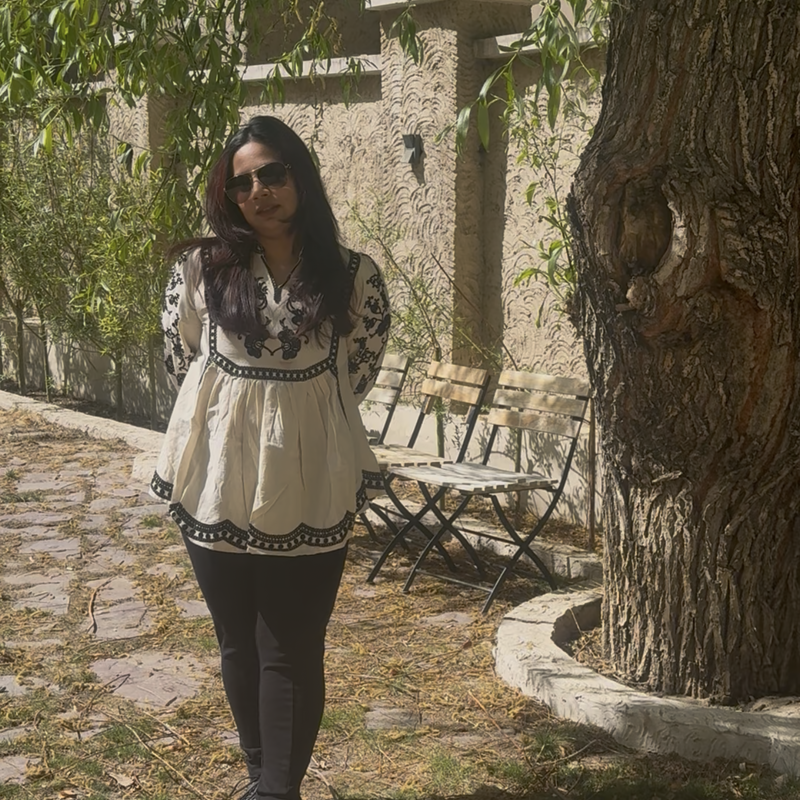
 Shruti Kaushik
Wise Mango writes LinkedIn content for business and non-fiction authors who need their ideas to reach readers, speaking organisers and the people who buy books in bulk, before and long after publication day. Shruti Kaushik, herself an author, interviews you on the thinking behind the book, drafts to a written voice guide, edits every piece and sends it to you for an accuracy check before you publish. Two 60-minute discovery calls start the engagement; pricing is shared on a call.
What LinkedIn has to do for authors
A book gives an author a point of view and a reason to be read. LinkedIn is where that point of view keeps earning: speaking invitations, consulting enquiries, corporate orders, a second book. The profile has to do more than announce the book. It has to show the thinking well enough that a reader wants the rest.
The difficulty is that authors are good at long form and often tired of the material by publication. The content has to re-cut ideas from the book for a different medium and a different reader, and it has to keep producing after the launch window, when most author profiles go quiet.
What changes in the process
Interviews with authors start from the manuscript, so the voice guide is built on how you already write and the book's own arguments, and then look for what the book left out: the examples that did not fit, the objections readers raise, the ideas you have changed your mind about since. Posts are drafted from that, in your voice, and you approve every piece.
Launch content is handled as a phase with a plan, not as the whole engagement, because the audience built after publication is the one that buys the next book. Where publisher or co-author agreements restrict what can be excerpted, those limits are recorded in the voice guide. No sales or ranking figures are used unless you can show them and want to.
Three sample topic angles
- The chapter I would rewrite now. What you argued, what you have seen since, and how your view has moved.
- The example that did not make the book. A story cut for length, and the point it makes better than the one that stayed.
- The objection I hear most from readers. The pushback, stated fairly, and your answer to it.
These are starting points, not a content calendar. The real list comes out of the interviews, and nothing is published that you cannot stand behind.
How the engagement runs
- Two discovery calls, 60 minutes each. Business context, who you need to reach, the point of view you should be known for, and how you sound when you talk about your work. These produce a written voice guide.
- A written proposal. Deliverables, review rounds, responsibilities, fees and exclusions, in writing before you commit. Pricing is shared on a call, not on this page.
- Interviews, then drafts. Each cycle opens with a short conversation and closes with drafts matched to the voice guide. Shruti Kaushik writes and edits; AI supports the drafting where it saves time; a human editor reads every piece.
- Your approval. You check every fact and approve every piece before it is published. You publish from your own account. Wise Mango never asks for your LinkedIn login.
Wise Mango works remotely with clients worldwide. No reach, lead or revenue outcome is promised; progress is reviewed against measures agreed with you.
A free resource whichever route you take: the Klype post checker, built by the same founder, flags unsupported claims, invented stories and machine-writing patterns in any LinkedIn draft, with no sign-up.
Book a 30-minute strategy call ↗
Prefer email? Write to shruti@wisemango.io with a line about your work and who you need to reach.
Common questions
Can you write posts from my manuscript before publication?
Yes. Pre-publication content is drafted from the book's arguments without excerpting restricted material, and any publisher or co-author limits are recorded in the voice guide.
Will the posts sound like my book?
The voice guide is built from the manuscript and two discovery calls, and every draft is matched to it. You approve every piece.
What happens after the launch?
The engagement is designed to continue past the launch window, because the audience that buys the next book is built afterwards. Scope and duration are set in the written proposal.
Who writes the content?
Shruti Kaushik, an author herself, writes and edits the work. AI supports drafting; a human editor reads every piece; you approve before publishing from your own account.