
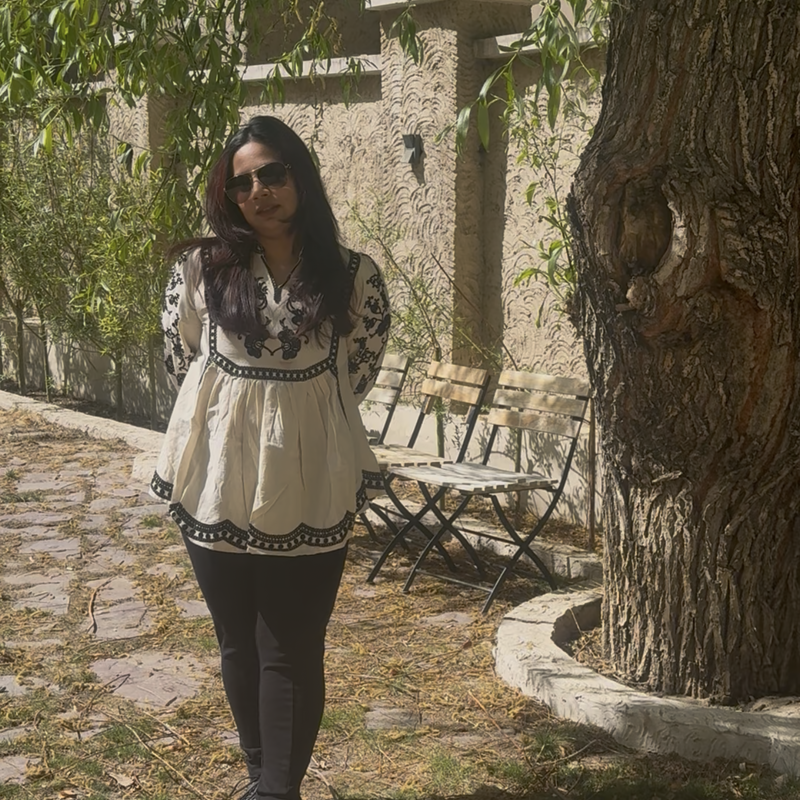
 Shruti Kaushik
Wise Mango writes LinkedIn content for doctors, clinicians and healthcare leaders who want a professional presence for peers, employers, partners and the public, without any risk to patient confidentiality or professional standing. Shruti Kaushik interviews you, drafts to a written voice guide that records what cannot be said, edits every piece and sends it to you for an accuracy check and sign-off before you publish. Two 60-minute discovery calls start the engagement; pricing is shared on a call.
What LinkedIn has to do for doctors
For most doctors the LinkedIn audience is not patients. It is peers, hospital and health-system leaders, researchers, health-tech companies, policy people and journalists. The profile has to show clinical judgement and a point of view on how care is delivered, in language a non-specialist can follow.
The limits are firm. Patient information cannot appear in any identifiable form. Nothing can read as advice to an individual. Medical council and advertising rules in most countries restrict claims about treatments, outcomes and superiority, and the rules vary by jurisdiction. The content has to be useful inside those limits rather than vague because of them.
What changes in the process
The voice guide starts with the exclusions: no patient cases, even anonymised, unless your institution has cleared them; no individual advice; no treatment or outcome claims; no comparisons with other practitioners. Where your hospital, practice or professional body has a communications policy, approval includes it, and the written proposal records that step.
Interviews then focus on what is both allowed and interesting: how a clinical team makes decisions, what has changed in your specialty, what you wish administrators or technology companies understood about clinical work, how you train juniors. You check every statement for accuracy and for compliance with your own rules. Wise Mango does not interpret those rules for you; your sign-off is final.
Three sample topic angles
- What technology companies get wrong about clinical work. A specific gap between how a tool is designed and how a clinic actually runs.
- How we teach judgement to juniors. One habit you insist on in training and why it matters more than it looks.
- What changed in my specialty this year. A development, stated generally, and what it means for how care is organised.
These are starting points, not a content calendar. The real list comes out of the interviews, and nothing is published that you cannot stand behind.
How the engagement runs
- Two discovery calls, 60 minutes each. Business context, who you need to reach, the point of view you should be known for, and how you sound when you talk about your work. These produce a written voice guide.
- A written proposal. Deliverables, review rounds, responsibilities, fees and exclusions, in writing before you commit. Pricing is shared on a call, not on this page.
- Interviews, then drafts. Each cycle opens with a short conversation and closes with drafts matched to the voice guide. Shruti Kaushik writes and edits; AI supports the drafting where it saves time; a human editor reads every piece.
- Your approval. You check every fact and approve every piece before it is published. You publish from your own account. Wise Mango never asks for your LinkedIn login.
Wise Mango works remotely with clients worldwide. No reach, lead or revenue outcome is promised; progress is reviewed against measures agreed with you.
A free resource whichever route you take: the Klype post checker, built by the same founder, flags unsupported claims, invented stories and machine-writing patterns in any LinkedIn draft, with no sign-up.
Book a 30-minute strategy call ↗
Prefer email? Write to shruti@wisemango.io with a line about your work and who you need to reach.
Common questions
Can you use patient stories?
No. Patient information is excluded in any identifiable form. Even anonymised cases are not used unless your institution has cleared them in writing.
Does this comply with medical advertising rules?
The voice guide records the constraints that apply to you, drafts stay inside them, and you approve every piece. Where your institution or professional body requires review, it is added to the approval step. Your sign-off is final.
Who is the audience for a doctor on LinkedIn?
Mostly peers, health-system leaders, researchers, health-tech companies and policy people, rather than patients. The content is written for them.
Who writes the content?
Shruti Kaushik writes and edits the work. AI supports drafting; a human editor reads every piece; you and, where required, your institution approve before publishing from your own account.