
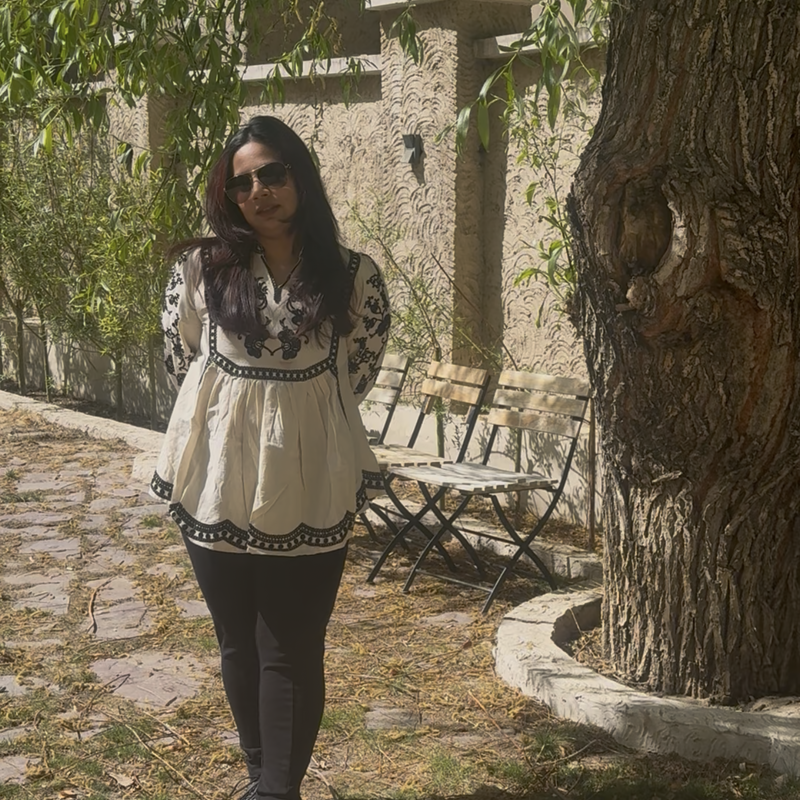
 Shruti Kaushik
Wise Mango writes LinkedIn content for fractional executives, the CMOs, COOs, CFOs and CTOs who work with several companies at once and sell on judgement. Shruti Kaushik interviews you on how you run a function part-time, drafts to a written voice guide, edits every piece and sends it to you for an accuracy check before you publish. Two 60-minute discovery calls start the engagement; pricing is shared on a call.
What LinkedIn has to do for fractional executives
Fractional work is sold to founders who are unsure whether a few days a month can run a function. Your profile has to answer that doubt. It also has to keep working between engagements, because the next client is usually found while the current ones are still running.
The content therefore has to show how you work across companies: what you set up in the first thirty days, what you refuse to touch, how you hand over, and how you decide which problems need you and which need a hire. Titles and past companies do not do this. Operating detail does.
What changes in the process
Interviews draw on the patterns you see across clients rather than any one client's situation, which also keeps confidentiality simple: the voice guide records that current and former clients are not named or identifiable unless they have agreed. Proof is the specificity of the operating detail, such as the first three reports you build, or the meeting you cancel first.
Because fractional executives sell to founders, posts are written in the founder's vocabulary and at founder length. Where you work in a specific function, the angles stay inside it. A fractional CFO does not need opinions about marketing on the profile; the profile needs to show what happens to the finance function in your first quarter.
Three sample topic angles
- What I set up in the first thirty days. The reports, rhythms or systems that come first, and why that order.
- When a company needs a full-time hire instead of me. The signs you look for and how you tell a client.
- A pattern I see in every second company. One recurring problem in your function and what fixes it.
These are starting points, not a content calendar. The real list comes out of the interviews, and nothing is published that you cannot stand behind.
How the engagement runs
- Two discovery calls, 60 minutes each. Business context, who you need to reach, the point of view you should be known for, and how you sound when you talk about your work. These produce a written voice guide.
- A written proposal. Deliverables, review rounds, responsibilities, fees and exclusions, in writing before you commit. Pricing is shared on a call, not on this page.
- Interviews, then drafts. Each cycle opens with a short conversation and closes with drafts matched to the voice guide. Shruti Kaushik writes and edits; AI supports the drafting where it saves time; a human editor reads every piece.
- Your approval. You check every fact and approve every piece before it is published. You publish from your own account. Wise Mango never asks for your LinkedIn login.
Wise Mango works remotely with clients worldwide. No reach, lead or revenue outcome is promised; progress is reviewed against measures agreed with you.
A free resource whichever route you take: the Klype post checker, built by the same founder, flags unsupported claims, invented stories and machine-writing patterns in any LinkedIn draft, with no sign-up.
Book a 30-minute strategy call ↗
Prefer email? Write to shruti@wisemango.io with a line about your work and who you need to reach.
Common questions
How do you avoid revealing client information?
Posts are built from patterns across engagements, not from any single client's numbers or plans. Current and former clients are not named or identifiable unless they have agreed, and the voice guide records that rule.
Can the content run while I am between engagements?
Yes. The interview material is about how you work, so the cycle continues whether or not you have a live client that month.
How much of my time does it take?
Two 60-minute discovery calls, a short interview each cycle, and time to check facts and approve drafts. You do not write from scratch.
Who writes it?
Shruti Kaushik writes and edits the work. AI supports drafting; a human editor reads every piece; you approve before publishing from your own account.