
A useful positioning brief connects a specific buyer situation to a decision you help them make. Build it from real questions, credible evidence and clear boundaries, then test whether another person can explain your offer back to you. Use the workbook below to turn that process into a reusable one-page brief.
1. Start with the buying situation, not the demographic
An ideal customer profile often stops at industry, company size and job title. Those details help identify a business, but they do not explain why someone might need you today. Two operations directors at similar companies can have very different priorities. One is replacing a broken process; the other is protecting a process that already works.
Describe the event that makes your work relevant. It could be a new team, an upcoming launch, repeated customer questions or a handoff that nobody owns. Then write what the buyer is trying to decide. This turns an abstract audience into a concrete situation you can address.
For a fictional onboarding consultancy, the starting point might be: an operations lead whose new customers keep asking what to do next. The decision is not whether to buy consulting in general. It is whether to change the instructions, the workflow or the ownership of onboarding. This example is a planning exercise, not a reported client result.
2. Separate what the buyer says from what you assume
Create two columns. In the first, record the words people actually used in enquiries, support conversations or approved interview notes. In the second, record your interpretation. The distinction prevents a reasonable hypothesis from becoming a supposedly proven market fact in the next piece of content.
If a buyer says that customers ask too many questions, possible explanations include unclear instructions, missing information or expectations set incorrectly during sales. Do not jump directly from that sentence to your preferred service. Look for another observation that helps distinguish the explanations.
When you have no interviews yet, mark the buyer situation as a hypothesis. Use your first conversations to challenge it. You can still write useful educational material while researching, but avoid claims such as every company struggles with this or most customers want this unless you have an appropriate basis.
3. Explain the useful difference in your work
A useful difference tells the buyer how you approach the decision differently. Faster, better and AI-powered are descriptions that many businesses can repeat. A more specific explanation might be: we review the point at which the customer loses the next action before recommending more training material.
Write the steps you actually take and the deliverable the buyer receives. For the fictional consultancy, this could be a review of onboarding instructions followed by a prioritised change list. Do not add a revenue guarantee simply because a deliverable feels less exciting. The buyer needs to understand what they are buying and what remains uncertain.
Now state the boundary. Perhaps implementation is separate, analytics access is required or the service is not suitable before the company has an onboarding process. Boundaries can make a message more credible by preventing a reader from assuming the service does everything.
4. Build an evidence shelf before building a content calendar
List the material you can use to support your explanation: approved examples, product screens, documented process changes, relevant qualifications or a clearly labelled demonstration. Record where each item came from and whether you have permission to publish it. A folder full of material is less useful than a short list with clear usage rules.
Keep observed results separate from intended benefits. We changed the order of the instructions describes an action. Customers completed onboarding faster describes an outcome that would need supporting measurement. Rewriting the first as the second changes the claim, even if the sentence sounds more persuasive.
If you are working with private client information, use an anonymised explanation only when the remaining details do not identify the person or business. Otherwise create a labelled demonstration. Do not combine details from several projects into one story and present it as a single real engagement.
5. Write the brief in five plain sentences
Use this structure as an internal working note: We work with [buyer] when [situation]. They need to decide [decision]. We help by [actual approach or deliverable]. We can show [available evidence]. We do not promise or include [boundary]. The purpose is clarity, not a finished advertising slogan.
Here is the fictional example: We work with operations leads when new customers repeatedly ask what to do next. They need to identify where instructions or ownership are unclear. We review the onboarding path and provide a prioritised change list. We can show a labelled example review. Implementation and any performance outcome need separate agreement.
The result may sound less dramatic than an industry-disrupting headline. That is useful at this stage. Once the brief is accurate, you can choose stronger public language without changing the underlying offer. Keep the plain version as a reference when reviewing drafts.
6. Test comprehension before testing volume
Give the brief to someone who has not helped write it. Ask who it is for, what situation it addresses, what they would receive and what they should not assume. Avoid asking whether they like it; people can like language they do not understand.
Record their answers without correcting them halfway through. If they interpret a process review as a guaranteed increase in sales, revise the message. If they cannot tell which buyer it serves, add the missing context. This small exercise checks comprehension, not market demand or conversion potential.
Next, turn the brief into three different pieces: a buyer-question answer, a process explanation and a practical checklist. Check whether each piece reinforces the same position without repeating the same wording. Keep useful disagreement from real conversations as input for the next revision.
7. Use the brief in Wise Mango, Inc. or Klype
If you want a team to develop the positioning and editorial programme with you, bring the completed worksheet to a Wise Mango, Inc. strategy call. The worksheet provides a concrete starting point for scoping the engagement instead of repeating a broad introduction.
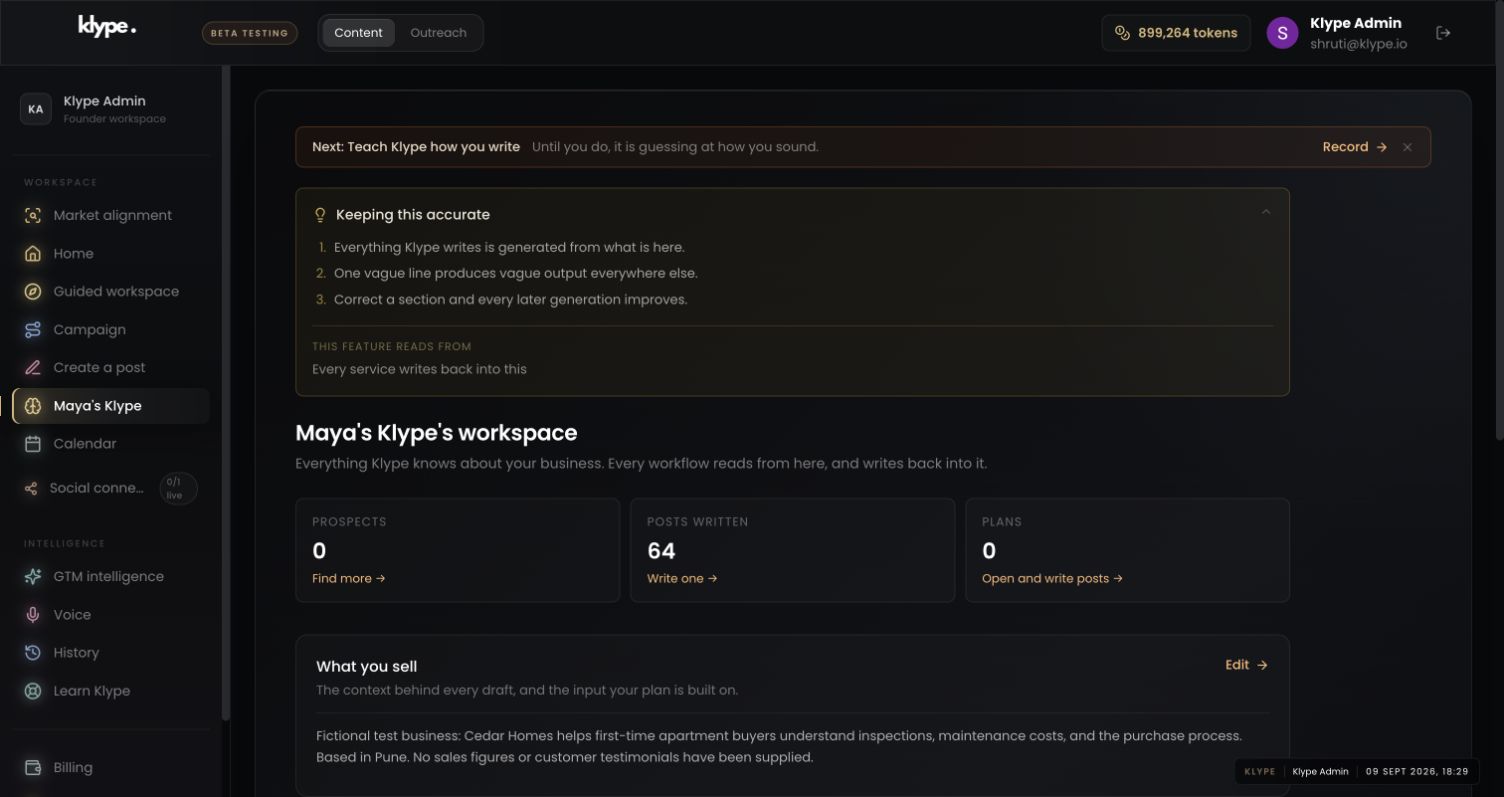
If you work independently, use the relevant details when setting up business context in Klype. Supply only information you are comfortable processing in the platform, and check the saved context before generating content. Downloading this workbook does not automatically create a workspace or transfer anything into Klype.
Review the brief when your offer, audience or evidence changes. A reusable brief saves effort only if it remains accurate. Date the working copy and keep a short note explaining what changed so your next piece does not repeat an outdated claim.
Common questions
Is this the same as a brand slogan?
No. This is the factual brief behind the message. A slogan can be shorter, but it should not imply an offer or outcome the brief does not support.
Can one business have more than one positioning brief?
Yes. Create a separate brief when the buyer situation or offer changes materially. Avoid merging different buyers into a sentence so broad that it guides nothing.
Do I need customer research to begin?
You can begin with clearly marked hypotheses and real experience. Use conversations to refine them; do not present assumptions as validated market research.
Choose your way of working
Want a team to help with strategy, editing and distribution? Talk to Wise Mango, Inc.. Prefer to manage your business context and content yourself? Explore Klype AI. Check the platform's current features and subscription terms before joining.

Founder of Klype. Writing about clear business communication, useful content and practical distribution.
Connect on LinkedIn ↗