
A useful content interview draws out concrete decisions, explanations and disagreements. Capture the speaker's reasoning first, then shape the material into a post without adding events or results they did not describe.
Start with something that actually happened
Ask what took longer than expected this week, what a customer misunderstood or which decision required a difficult trade-off. These questions give a speaker something to remember. Asking for their biggest leadership lesson often produces a rehearsed answer instead.
Follow up with what changed their mind, what they considered and what they would explain differently next time. An ordinary detail can be more valuable than a dramatic story. You do not need a crisis, a famous client or an impressive number for the material to be useful.
Keep a source note beside each idea
Separate the speaker's exact words from your interpretation. Mark any figures that need checking and any names that should stay private. If a quote needs substantial rewriting, present it as a paraphrase rather than putting polished wording in quotation marks.
A simple source note can contain the original explanation, the intended lesson and a short list of facts to confirm. This reduces repeated questions later and gives the reviewer a fair chance to spot an accidental change in meaning.
Edit the structure without rewriting the person
Choose a format that suits the explanation: a short observation, a step-by-step guide, a comparison or a longer narrative. Do not force every interview into three paragraphs or a problem-agitation-solution template.
Preserve characteristic words when they make the idea clearer. Remove repetition, not personality. Read the draft aloud and ask whether the founder would comfortably say it to a customer. If not, locate the sentence that sounds like someone else's marketing copy.
Make approval easy and specific
Ask the reviewer to check accuracy, privacy and whether the argument reflects what they meant. Avoid a vague request to make it better. Clear review questions are easier to answer and more likely to improve the next draft.
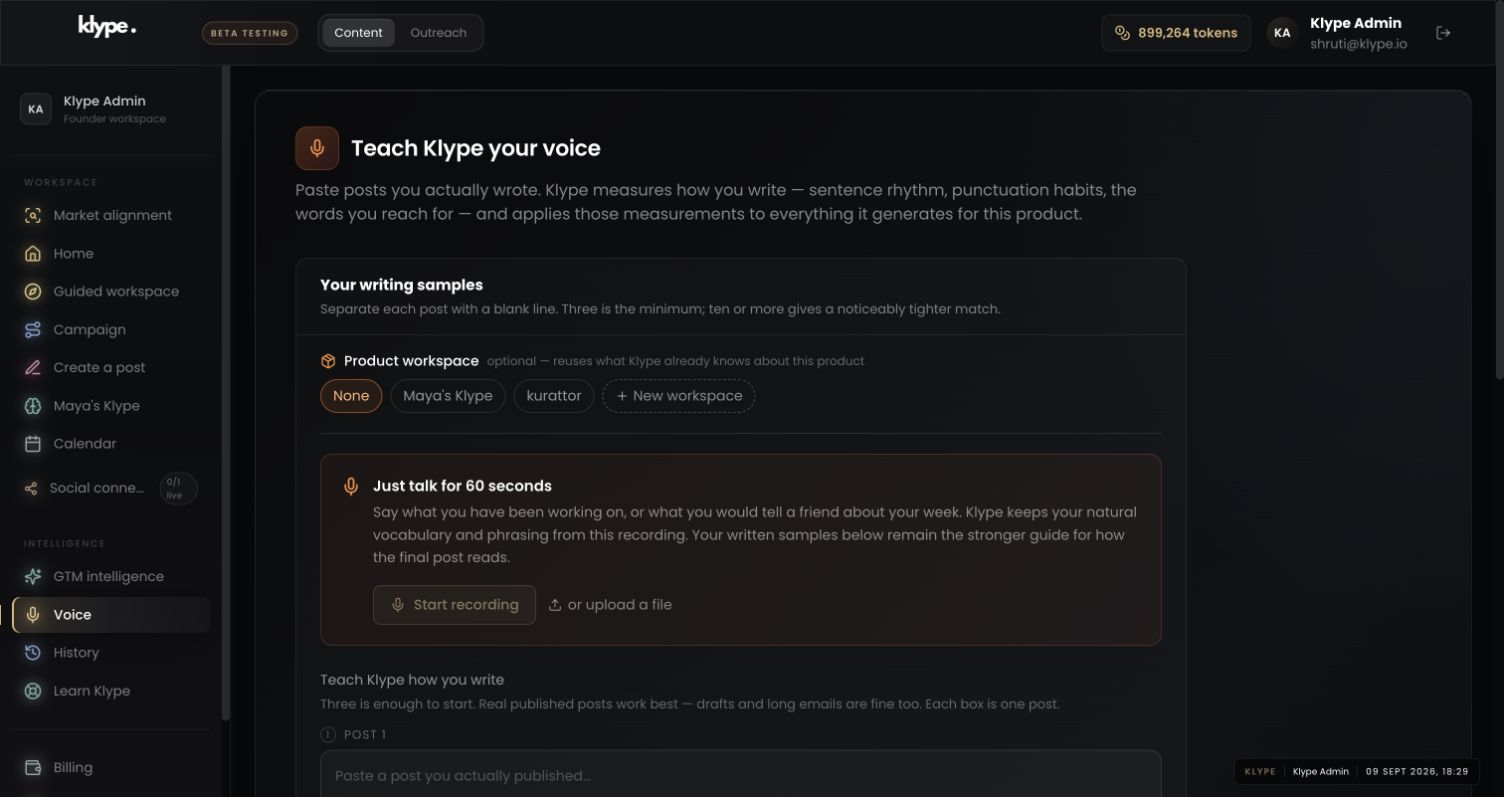
Klype's voice area provides a place to supply writing examples. A software profile is supporting context, not permission to invent personal stories. Human review remains particularly important when content involves customer confidentiality, health or financial decisions.
Common questions
Do I need to record every interview?
No. Written notes can work. If recording others, obtain their permission and avoid collecting private material that is not needed.
Should every post sound conversational?
No. Some explanations are best as precise instructions or a concise professional argument. The goal is a recognisable voice, not a compulsory informal tone.
Choose your way of working
Want a team to help with strategy, editing and distribution? Talk to Wise Mango, Inc.. Prefer to manage your business context and content yourself? Explore Klype AI. Check the platform's current features and subscription terms before joining.

Founder of Klype. Writing about clear business communication, useful content and practical distribution.
Connect on LinkedIn ↗