
Start with a specific buyer, a recurring decision they face and the expertise you can genuinely contribute. Posting more often cannot repair a message that never makes those three things clear.
Choose a decision, not a broad topic
A topic such as leadership, technology or growth gives you almost unlimited things to say. It gives a potential customer very little reason to remember you. A decision is narrower: how to evaluate a vendor, when to replace a process, or what to check before committing a budget.
Write one sentence: I help this kind of person think clearly about this kind of decision. It does not need to sound like a public slogan. Its job is to guide the work. If it describes everyone and everything, narrow it until you can name an actual situation.
Separate your knowledge from your claims
Collect observations you can explain, examples you are allowed to share and opinions you can defend. Put unverified numbers, private customer details and hoped-for outcomes in a separate list. They are not publishing material just because they would make a stronger headline.
For example, a founder can explain why a handoff breaks down without claiming their product has solved it for hundreds of customers. The useful part may be the decision framework, not a dramatic success story. Specific reasoning usually says more than a vague claim of expertise.
Give each post a job
Use three roles for an initial set of posts: help a reader recognise a problem, understand a trade-off or take a practical next step. One post need not accomplish all three. This prevents every piece from ending with the same sales pitch.
Before publishing, ask whether a reader could connect the post to the kind of work you do. If the connection requires reading your entire profile, add the missing context. Do not force the product into every paragraph; make your perspective relevant to the buyer's situation.
Review the pattern, not a single winner
After a small batch, compare the questions people ask and the roles of those who respond. Treat early engagement as directional, not proof of product demand. A popular post can be useful without establishing that your positioning is commercially effective.
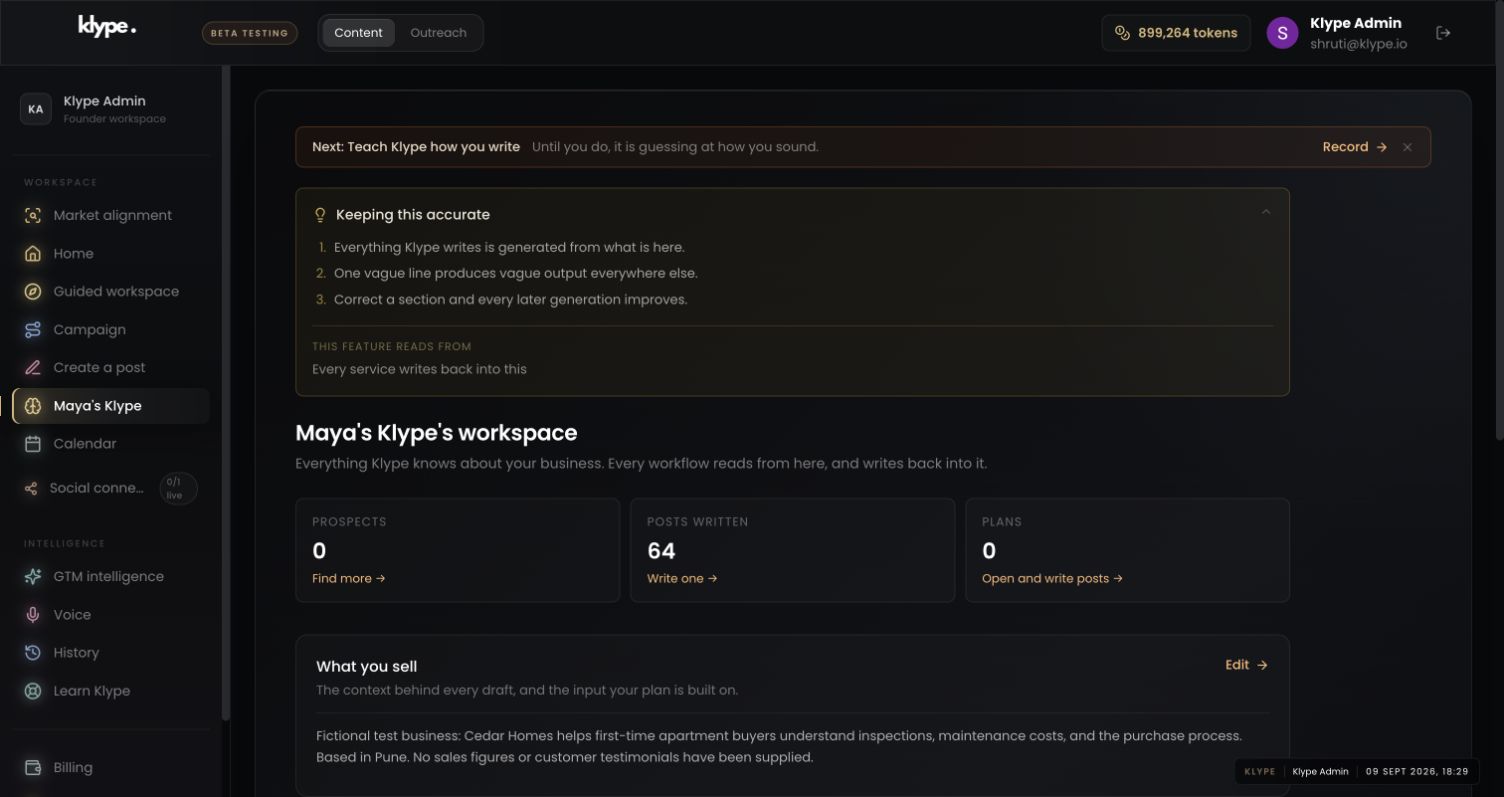
Keep a short record of what you said, who responded and what conversation followed. In Klype, saved business context can support subsequent drafting. It cannot replace your judgment about which buyers and problems you actually want to serve.
Common questions
Should founders only post about their product?
No. Explain the problems, decisions and trade-offs around your work. Product examples are useful when they genuinely help the reader, not as an obligatory ending.
Can I start without a polished positioning statement?
Yes. A clear internal sentence is enough to begin. Improve it with real conversations rather than waiting for a perfect slogan.
Choose your way of working
Want a team to help with strategy, editing and distribution? Talk to Wise Mango, Inc.. Prefer to manage your business context and content yourself? Explore Klype AI. Check the platform's current features and subscription terms before joining.

Founder of Klype. Writing about clear business communication, useful content and practical distribution.
Connect on LinkedIn ↗