
Explain the situation you work on, the deliverable you produce and the decisions you help a client make. Specific descriptions of your process are more useful than broad promises of growth.
Name the work a client recognises
A buyer may not be searching for your job title. They may be trying to make an onboarding flow clearer, turn interview notes into an article or prepare a presentation for a particular meeting. Begin with that recognisable need.
Write a plain version of your service: I work with this type of client on this problem and deliver this piece of work. Leave out adjectives until the sentence makes sense without them. You can add personality later without hiding the practical meaning.
Show the decisions behind a deliverable
Explain why you changed the order of a page, removed a question from a form or chose one opening over another. When permission is limited, use a clearly labelled demonstration instead of revealing confidential client work.
Do not invent a conversion lift to make the explanation sound stronger. If an outcome was not measured, describe the intended improvement and the reasoning behind it. That distinction helps a potential client evaluate your thinking honestly.
Make the next step easy to understand
A reader should know what information to send and what happens next. For example, ask for the current page, the audience and the main problem. Do not promise a full proposal before you have enough context to scope the work.
Keep the call to action matched to the article. A process explanation can invite a reader to compare it with their own workflow. A service post can invite an enquiry. Not every piece needs to become a sales message.
Build a reusable source of context
Keep approved samples, common questions and your own explanations together. They become a better starting point than repeatedly generating generic content from an empty prompt. Update them when your offer or preferred clients change.
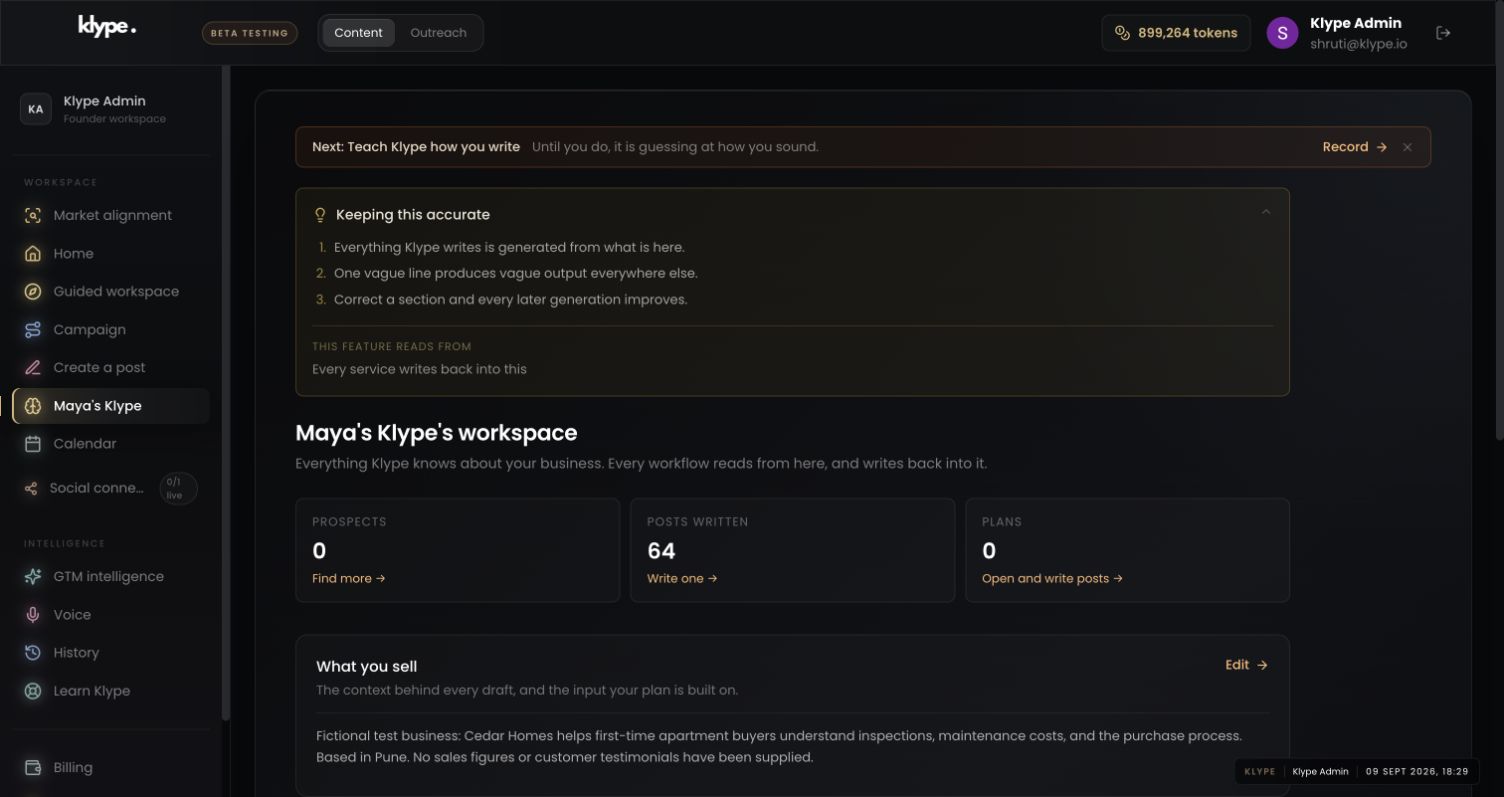
Klype can hold business context for drafting. It remains your responsibility to check that a post describes your actual services and does not promise work you cannot deliver. A consistent publishing routine should support client work, not become another full-time job.
Common questions
What if I cannot share client names?
Explain the method without identifiable details, or create a labelled demonstration. Do not imply that a fictional example is a real client engagement.
Do I need to choose only one industry?
Not necessarily. Start with a clear type of problem or deliverable. Specificity can come from the work as well as the industry.
Choose your way of working
Want a team to help with strategy, editing and distribution? Talk to Wise Mango, Inc.. Prefer to manage your business context and content yourself? Explore Klype AI. Check the platform's current features and subscription terms before joining.

Founder of Klype. Writing about clear business communication, useful content and practical distribution.
Connect on LinkedIn ↗