
Start with a real project, explain your contribution and describe what you learned. Students do not need invented authority or a founder-style personal brand to share thoughtful professional work.
Choose something with a concrete contribution
A class project, student society event, open-source contribution or independent experiment can provide useful material. State what the project was and what part you handled. Credit teammates and distinguish your work from the group's overall result.
If the project has not been used outside class, say so. A classroom prototype can still demonstrate reasoning and effort. Calling it a deployed product or a successful business when it is neither makes the account less credible.
Explain a decision rather than listing buzzwords
Describe a constraint, the alternatives you considered and why you chose one approach. A reader can learn more from one clear trade-off than a paragraph containing every tool name in the project.
For example, explain why your team simplified a survey or changed how an interface presented information. If you did not measure whether the change worked, describe what you would test next. Uncertainty is a normal part of learning, not a defect to hide.
Share safely and fairly
Check whether course materials, team agreements or internship rules restrict what you can publish. Leave out private records and personal information. Ask collaborators before sharing identifiable photos or quotes.
Writing assistance should help you explain your own work, not fabricate experience or bypass academic requirements. Follow your institution's rules about AI use and attribution. This guide is about communicating completed work, not submitting generated assignments as your own.
Make the invitation modest and useful
Invite feedback on a particular decision or point readers to a project page you are allowed to share. Avoid asking strangers to endorse skills they have not seen. A clear request makes it easier for someone to offer relevant advice.
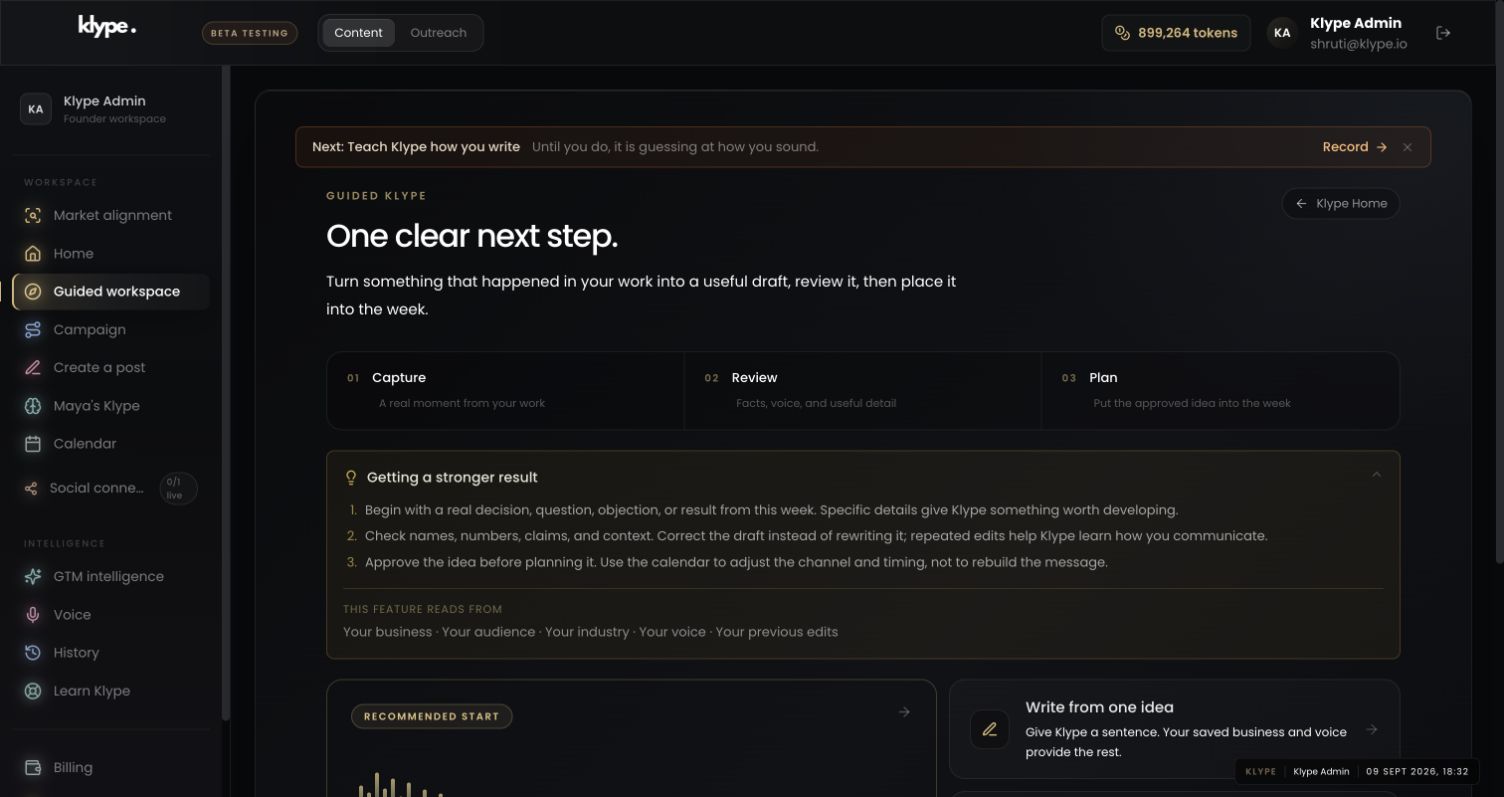
Klype's guided and drafting workflows can provide a starting point for explaining an idea. Review every sentence for accuracy and ownership. The goal is to make your contribution easier to understand, not to make a student project sound like a company press release.
Common questions
Can a first-year student post on LinkedIn?
Yes. Useful communication can come from honest learning and small projects. Experience should be represented accurately.
Should students buy a marketing service to start?
Not as a default. Begin with clear descriptions of real work and a manageable routine. Choose any paid support only when it fits a genuine need and budget.
Choose your way of working
Want a team to help with strategy, editing and distribution? Talk to Wise Mango, Inc.. Prefer to manage your business context and content yourself? Explore Klype AI. Check the platform's current features and subscription terms before joining.

Founder of Klype. Writing about clear business communication, useful content and practical distribution.
Connect on LinkedIn ↗